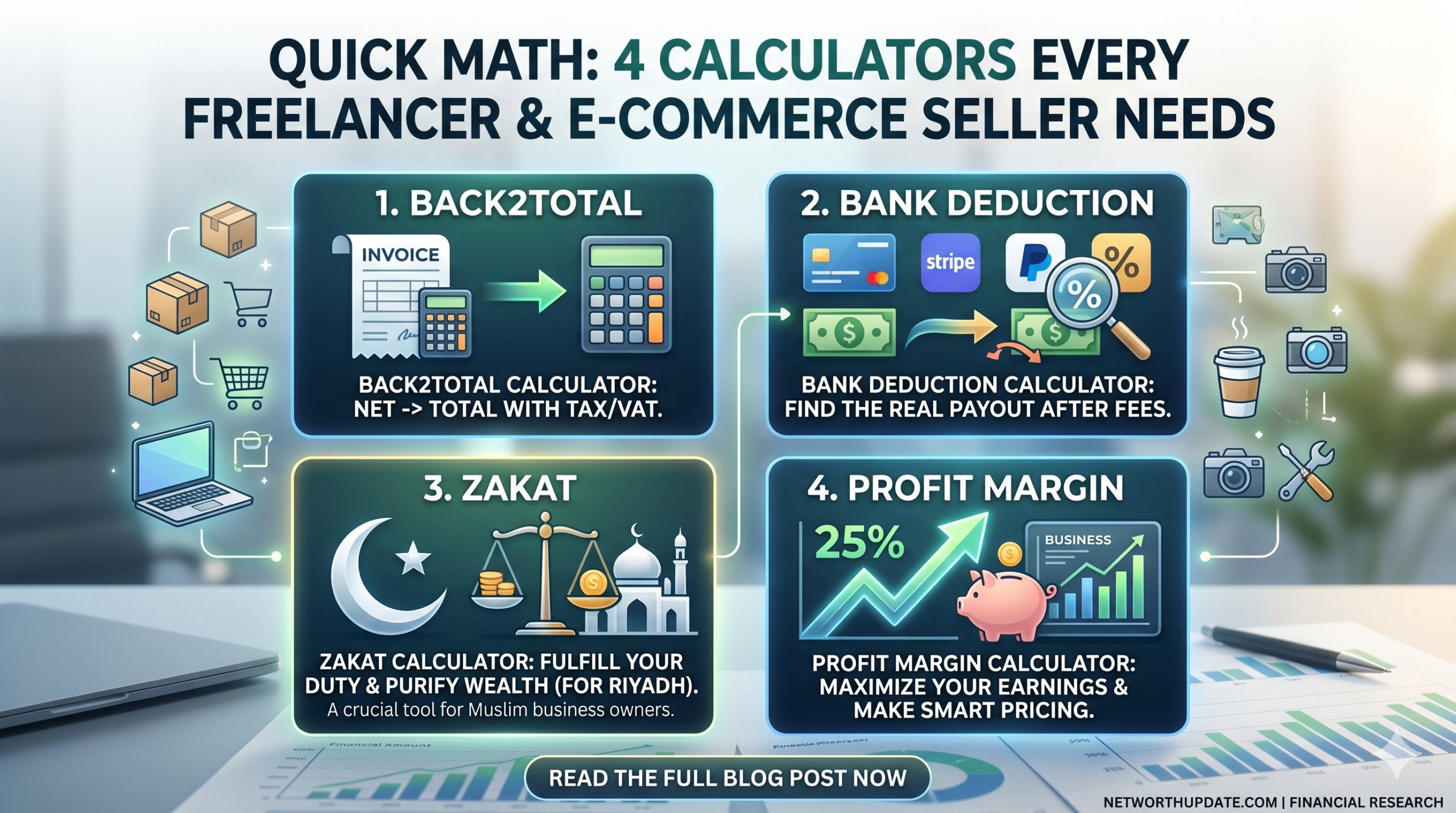
Quick Math: 4 Calculators Every Freelancer & E-commerce Seller Needs
Manual math takes time, and simple calculation errors directly reduce commercial revenue. Specialized digital calculators completely eliminate these costly mistakes by automating formulas for gross/net earnings, hidden banking fees, retail markups, and religious obligations. By replacing spreadsheet guesswork with dedicated digital utilities, freelancers and online sellers accurately protect their bottom lines.
This guide details the specific applications of four dedicated calculators available on X2XConverter, designed for retail and financial tracking. Using precise digital tools speeds up daily operations and ensures you keep the exact amount of money you earn.
The Financial Impact of Calculation Errors
Every percentage point matters when running an independent operation. E-commerce sellers and independent contractors often operate on strict budgets where miscalculating a single fee or markup reduces take-home pay immediately. A guide published by Shopify explains that a standard e-commerce profit margin sits around 10 percent. Missing a hidden bank fee or pricing a product incorrectly easily wipes out that margin entirely.
Replacing manual arithmetic with targeted digital calculators removes the risk from pricing strategies and payment collection.
Core Calculators for Retail and Financial Tracking
Different operational tasks require different mathematical formulas. Here is a direct breakdown of the specific tools required for accurate financial planning and daily operations.
Back2Total and Percentage Increase Calculator
Figuring out exact retail markups, calculating gross sales from net earnings, or determining standard percentage increases demands precise mathematical formulas. The Back2Total function works in reverse from your final desired payout, while the percentage increase tool ensures your markup calculations are accurate.
Manual calculations often fail here due to basic percentage misunderstandings. If you want to take home 1,000 dollars and your freelance platform takes a 20 percent fee, simply adding 20 percent (200 dollars) leads to a 1,200 dollar final price. A 20 percent fee on 1,200 dollars equals 240 dollars, leaving you with only 960 dollars. The correct formula requires dividing your target amount by the remaining percentage (0.80) to reach the correct 1,250 dollar gross price. A dedicated calculator automates this exact process alongside general percentage jumps.
Bonus Tip: Always calculate your required net payout before setting retail prices, rather than setting a rough price and hoping the remainder covers your expenses.
Bank Deduction Calculator
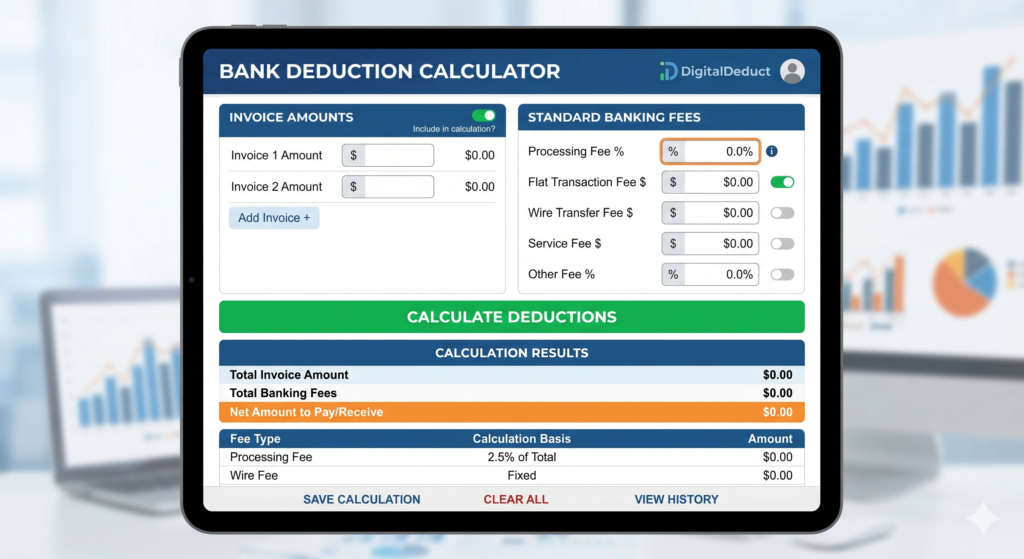
Client transfers frequently arrive with unexpected processing costs. Whether accepting international wire transfers or using third-party payment processors, these deductions add up rapidly over a fiscal quarter. A report from NerdWallet notes that international incoming wire fees regularly reach up to 16 dollars per individual transaction.
The bank deduction tool allows you to plug in your expected payment and anticipate exactly how much will land in your account after standard financial institution fees. This helps you determine if you need to pass specific processing fees onto your clients before sending the final invoice.
Bonus Tip: Bundle smaller client invoices into single monthly payments to minimize the impact of flat-rate processing fees.
Profit Margin Calculator
Setting a competitive price requires knowing exactly how much money remains after paying for the cost of goods sold. A dedicated margin calculator evaluates your production costs against your retail price to display your exact profit percentage.
This utility prevents sellers from accidentally pricing items at a loss during promotional discount periods. Many sellers confuse markup with margin. Markup is the percentage added to your cost price to create the retail price. Margin is the percentage of profit out of the final sale price. A specialized tool prevents confusing these two distinct metrics.
Zakat Calculator
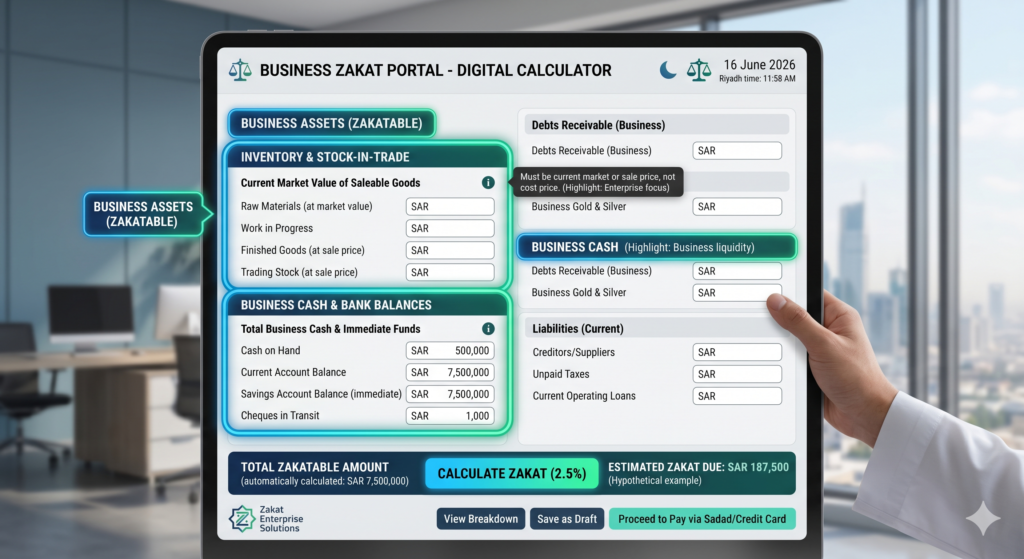
Muslim business owners carry specific annual charitable obligations based on their accumulated commercial wealth. The Zakat calculator offers a highly specific utility for accurately tracking these requirements without manual spreadsheet tracking.
Information provided by Islamic Relief details that the standard Zakat rate is 2.5 percent of qualifying wealth held for a full lunar year above a minimum threshold known as the Nisab. This specific calculator evaluates cash on hand, business inventory, and expected receivables to determine the exact obligatory amount.
Operational Tool Comparison
Selecting the correct tool depends on your immediate daily requirements. The table below outlines exactly when to deploy each specific calculator.
| Calculator Type | Primary Function | Best Used For |
|---|---|---|
| Back2Total | Calculates gross from desired net | Setting freelance rates on platforms with fixed percentage fees |
| Bank Deduction | Estimates incoming transfer fees | Anticipating international wire costs and processor deductions |
| Profit Margin | Determines actual profit percentage | Setting retail prices and planning promotional discount sales |
| Zakat | Calculates 2.5% charitable rate | Determining annual obligations on business inventory and cash |
Things to Consider Before Making a Decision
Selecting the right financial utilities requires evaluating your specific daily operations. Review these exact factors before relying on a new set of digital tools.
First, evaluate your transaction volume. High-volume sellers require rapid margin calculators to price hundreds of items, while independent contractors sending three invoices a month benefit more from bank deduction estimates.
Second, identify your most common points of revenue leakage. If international clients pay you frequently, prioritize estimating wire transfer fees before you draft your contracts.
Finally, consider your religious or local obligations. Ensure your chosen tools accommodate the specific rules and percentages required by your faith or local tax jurisdiction.
Frequently Asked Questions
How do gross and net calculations differ for independent contractors?
Gross income is the total amount billed to a client before any deductions occur. Net income represents the actual money deposited into your bank account after platform fees, taxes, and transfer costs are removed.
Why should online sellers use a specialized markup formula?
A specialized calculator prevents manual percentage errors. Adding 20 percent to your cost price does not equal a 20 percent profit margin. Using a dedicated tool prevents this common mathematical mistake.
Can online tools accurately estimate international transfer fees?
Yes. You can input the known percentage or flat fee of your payment processor to see the exact deduction before invoicing an international client. This allows you to adjust your final bill accordingly.
What business assets count toward annual Zakat calculations?
Business owners generally must calculate Zakat on cash on hand, raw materials, and finished goods intended for sale. Fixed assets like manufacturing equipment and commercial buildings are typically excluded from the calculation.
Moving Forward with Financial Accuracy
Accurate math directly protects commercial revenue. Relying on specialized digital calculators ensures every invoice, retail price tag, and charitable contribution is exact. Evaluate your current pricing strategies and payment collection methods to identify where automated calculations save you the most time and money. Upgrading from manual tracking to dedicated digital utilities guarantees better financial control over your independent operation.